What were the original problems you were setting out to solve with the business, and how have your experiences helped shape the firm’s creation?
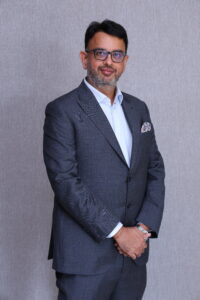
Dev Sampat
DS: The idea for the firm emerged from both an entrepreneurial ambition and a clear gap we observed in the market. Globally – particularly in the US – asset servicing businesses are largely independent institutions. However, in India, this space was almost entirely dominated by banks, with very few truly independent players.
All of us had extensive experience working within the custody and asset servicing ecosystem, which allowed us to recognise certain structural conflicts of interest. For instance, when capital is raised through Portfolio Management Services (PMS) in India, custodians typically hold complete KYC information of investors along with visibility into underlying investments. At the same time, most large banks also operate wealth management and investment businesses.
This creates understandable concerns among PMS managers around confidentiality. While banks maintain strict internal controls and Chinese walls, client data ultimately resides within the same institutional systems. Protecting investor confidentiality therefore becomes a critical consideration.
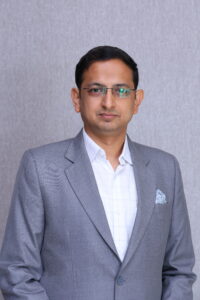
Vivek Singhania
VS: A second challenge relates to strategy confidentiality. Many leading Indian banks – including those with significant asset management arms – run competing investment strategies across long-only funds, alternative investments, and global asset management platforms. Managers are often cautious about sharing sensitive portfolio and strategy information with institutions that may also operate in similar investment domains.
We therefore believed that an independent asset servicing model had an important role to play in India, offering neutrality, confidentiality, and alignment with clients’ interests. Historically, regulatory requirements, network infrastructure, and counterparty considerations meant that large domestic and global banks dominated this function. However, we saw a clear opportunity for an independent platform to emerge.
Ultimately, this market gap, combined with our shared entrepreneurial drive to build something of our own, led to the creation of the firm.
How do you view the evolution of the Indian financial services market and the opportunities created for firms like Dovetail?
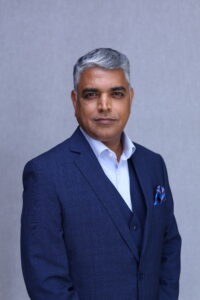
Mahesh Shekdar
MS: There are two broad points to consider.
First, the overall asset management industry in India is experiencing strong and sustained growth, driven by both global and domestic capital flows. Domestic participation, in particular, has expanded significantly over the past decade, which is reflected in the consistent growth of mutual fund assets and retail investor participation. While foreign portfolio investment (FPI) flows into listed markets have been intermittent, foreign direct investment has remained stable and continues to grow steadily.
Second, the introduction of the Alternate Investment Fund (AIF) regulations by SEBI in 2012 marked a turning point for boutique and alternative asset managers in India. Since then, the sector has expanded rapidly, with more than a thousand AIFs now operating in the country. This has led to the emergence of a vibrant boutique asset management ecosystem alongside the traditional mutual fund industry.
DS: The broader macroeconomic backdrop further reinforces this trajectory. In 2008, India was approximately a $1 trillion GDP economy, with overall market assets broadly comparable in size. By 2025, India has grown into a roughly $4 trillion economy, with total market capitalisation approaching $5 trillion – a pattern consistent with the evolution seen in other major economies.
Looking ahead, many projections suggest India could become a $10 trillion economy by around 2035. Our view is that the asset management industry is likely to grow at a pace faster than GDP expansion. Based on our estimates, total managed assets in India could reach approximately $13–13.5 trillion over this period.
Regulatory developments are also playing a crucial role. Initiatives such as GIFT City – India’s International Financial Services Centre – are designed to encourage asset managers who previously structured funds through jurisdictions such as Singapore, the UAE, or Mauritius to domicile their investment vehicles within India instead. This effectively enables the “onshoring of offshore” activity, bringing capital pooling structures, talent, and operations back into the country.
How does Dovetail differentiate itself in a competitive landscape?
VS: While asset servicing is undoubtedly a competitive space, the barriers to entry remain exceptionally high. For instance, obtaining a custodian licence requires extensive scrutiny by SEBI, which conducts a rigorous evaluation before granting approval.
So although competition exists, participation itself is limited to institutions that meet very stringent regulatory and operational standards. Within this environment, our differentiation rests on three key pillars.
The first is technology. While automation and digitisation are widely discussed across the industry, meaningful implementation is far more challenging. As a relatively young and homegrown institution, we had the advantage of building our technology architecture alongside the business itself. Unlike global custodians that typically deploy legacy global platforms and subsequently adapt them for Indian market requirements, we were able to design our systems from the ground up specifically for India.
Compliance forms a core part of our responsibilities as administrators, clearing members, and platform solution providers. Given the complexity and evolving nature of Indian regulatory requirements, we recognised early on that no existing technology comprehensively addressed compliance management. We therefore developed an in-house compliance management system that tracks all regulatory obligations – both current and upcoming. We are now integrating AI capabilities into this platform so that when new regulations are introduced, the system automatically compares them with prior frameworks and highlights regulatory changes in real time.
The second differentiator is our deep understanding of India’s regulatory ecosystem. Investing into India requires navigating multiple layers of regulation, including fund domicile considerations, SEBI guidelines, RBI foreign investment rules, and taxation frameworks. We have built strong internal expertise while also working closely with experienced former regulators.
MS: Our investment advisory board is chaired by Pramod Kumar Bindlish, a former SEBI official with over 30 years of regulatory experience. Our custody licence committee is led by M. Damodaran, the former Chairman of SEBI. In addition, our advisory board and independent director group include several distinguished professionals who have previously served in senior roles across key regulatory institutions.
Ultimately, our approach is anchored in three principles: operating as an independent asset servicing institution free from conflicts of interest, placing technology at the core of our operating model, and maintaining an exceptionally deep, detail-oriented understanding of regulatory requirements.
Looking ahead, what does success look like for Dovetail? What are your key priorities for growth in the next three to five years?
DS: Our vision for the business rests on three strategic priorities.
First, our objective is to evolve into a single, integrated service provider capable of capturing both inbound and outbound investment flows into India. From a global investor’s perspective, entering India typically involves either building operational infrastructure independently or leveraging a platform-based solution. We aim to support both approaches.
For clients who prefer to establish their own presence, we act as administrators while they set up and operate the full investment infrastructure. Alternatively, for investors seeking speed and efficiency, we offer a plug-and-play platform solution. This enables coverage across the entire investment lifecycle – from pre-trade activities such as entity setup and operational structuring, to post-trade services including custody, clearing, and fund accounting. We are already operating as clearing members and provide fund accounting services, while custody is currently under application. The broader intention is to deliver a fully integrated, end-to-end asset servicing solution.
MS: Second, from a client and market-access perspective, we aim to establish a presence in jurisdictions that have strong investment linkages and treaty relationships with India, and where capital flows are growing rapidly. In addition to our offices in Mumbai and GIFT City, we have expanded internationally with offices in Singapore and the UAE, and are in the process of establishing operations in Mauritius. This geographic footprint allows us to service global investors closer to their capital pools while maintaining strong execution capabilities in India.
Third, from an organisational standpoint, we have a clear long-term aspiration to list the company on the main boards of the NSE and BSE within the next three to five years. While it remains early in our journey, we believe there is a realistic pathway toward a public listing over the next four to five years. This is an internally aligned objective, and we continue to build the business with that milestone in mind.
Overall, our progress so far has been encouraging, but we recognise that significant groundwork remains as we continue scaling toward these long-term goals.