The market’s resilience during the war is only one part of the story. While financial institutions have been adapting to extraordinary conditions, Ukraine’s financial sector has continued to modernise its infrastructure, develop its capital markets and align its framework with European standards.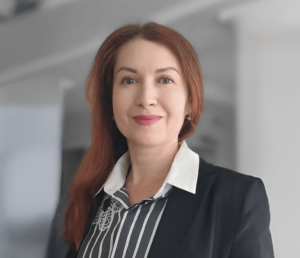
The invisible infrastructure behind investment
Reconstruction is often described through its most visible elements: funding commitments, infrastructure projects, businesses and physical assets. But between an investor deciding to allocate capital and that capital reaching a project, lies a financial system that has to make the transaction possible.
Investors need a predictable regulatory framework, legal certainty, investor protection, and reliable market infrastructure. Securities services then provide the mechanisms needed to support instruments through custody, settlement and ongoing post-trade processes.
Infrastructure alone is not enough. There also need to be investable assets and instruments capable of connecting capital with the real economy. This is one of the areas where Ukraine’s market is evolving. Initiatives around securitisation, the integration of interests Ukrainian Limited Liability Companies (LLCs) into depository infrastructure and simplified securities issuance are part of a broader effort to expand the channels through which capital can be raised and invested.
Agrarian Notes provide another example. Developed with IFC support and built on the infrastructure of the National Depository of Ukraine, the digital instrument is designed to support financing in the agricultural sector while also broadening the range of investment opportunities in the Ukrainian market. The significance of these developments goes beyond individual products. They are part of the infrastructure needed to make a future flow of capital possible.
Preparing the market before the capital arrives
Ukraine is working to align its capital-markets framework with more than 170 EU legal acts, but regulatory alignment is not simply a matter of adopting legislation. New rules also need to work in practice, for investors, financial institutions, market infrastructure providers and the systems supporting them.
This is where market practitioners like Bohdana Yefremova with almost 30 years of experience in custody and securities services, as well as active involvement in capital market bodies and market groups, may play an important role. A legislative proposal can look straightforward on paper, but its real implications only become clear when market participants work through actual scenarios and consider how changes would affect clients, operations and systems.
Two perspectives are better than one
The cooperation between Raiffeisen Bank International in Vienna and Raiffeisen Bank Ukraine shows how RBI’s regional securities-services model works in practice. Vienna connects clients to RBI’s wider network and brings the perspective of international investors, while Kyiv contributes firsthand knowledge of Ukraine’s market infrastructure, regulatory developments and operational realities.
The work is already happening
The Ukrainian market is not waiting for reconstruction to begin before preparing for the capital that reconstruction will require. Infrastructure is being modernised. Regulation is evolving, new investment instruments are being developed, and market participants are working to translate international standards and experience solutions that function locally.
Securities services may not be the most visible part of this story, but they are part of what makes the connection between international capital and the Ukrainian economy possible. As Bohdana Yefremova puts it, “We are preparing the soil before the planting season begins.”
Explore the expert perspective
What does this transformation look like from inside Ukraine’s capital market?
What do international investors need before they can approach the market with greater confidence?
How can local and international expertise work together to support the next phase of development?
In the full interview, Bohdana Yefremova shares her perspective on Ukraine’s market transformation, regulatory development, investor expectations and the role securities services can play in the country’s reconstruction.
Read the full interview in our white paper.