If there was one theme that unified the four participants with excitement and optimism, it was technology. Often criticised for their legacy technology and the fact that there is still some reliance on – wait for it – faxes, the experts in the room felt their advancements have been significant in recent years. One notes that the group was nearly at the end of their modernisation journey.
Collectively, the institutions represented at the table are investing well over a billion dollars a year in technology – a comment most have made publicly in the past – not just to improve legacy systems, but to create future-ready platforms.
“We’ve spent years modernising our estates,” one speaker explains. “The exciting part is that the curve is finally shifting. More of our investment now goes into innovation rather than maintenance.”
The contagious excitement around AI
Artificial intelligence, in particular, has moved from hype to tangible productivity. Several executives describe development cycles cut from 12 months to as little as three. AI now generates rules, writes user stories and supports engineers, reducing time-to-market and freeing up human capacity for higher-value work.
Cuthbertson highlights that 100% of BNY staff are trained with AI and more than 50% are using it on a daily basis.
“It’s not just operational efficiencies for us. We’re seeing development times cut,” he adds. “We recently did a proof of concept that previously would have taken us 12 months. We did it in three [months] because we have AI generating rules for us, it’s writing user stories and it’s also providing the framework for engineers to code as well.
“We’re seeing it throughout the development life cycle and also in pure engineering. The access and system vulnerabilities that we spoke about before in terms of remediating for cyber, Eliza (our AI) is doing that for us. Of course, humans are in the loop and we’re making sure that everything’s checked, but the heavy lifting and boring type of engineering that I’m sure people don’t want to be doing is actually starting to be taken over by AI.”
Undisputedly the talk of the town at the moment, agentic AI – systems capable of taking contextual decisions – is already reshaping systems and organisational models. What was once a delegated operations or technology project has become a front-to-back, product-led transformation. As one executive observes, “This isn’t a lab experiment anymore. It’s a board-level agenda.”
Some of the custodians believe that AI – rather than blockchain – will be the key driver of the operational acceleration toward same-day or even instantaneous settlement.
“I really think it’s AI that will drive the efficiency that we need,” Elson adds. “I think it’s AI more than DLT that is going to generate the efficiency that’s going to get us to T0 at scale in traditional assets and markets.
“It’ll take out those remaining tasks that are still manual and drive the insights that we all need to be able to speed up cross-border settlement, allocation and trade matching and ultimately get us to T0.
Others highlighted AI’s role in client service. “Sixty per cent of client queries are trade-status questions,” said one. “That’s now solvable through agentic AI. We’re finally matching technology to the problem.”
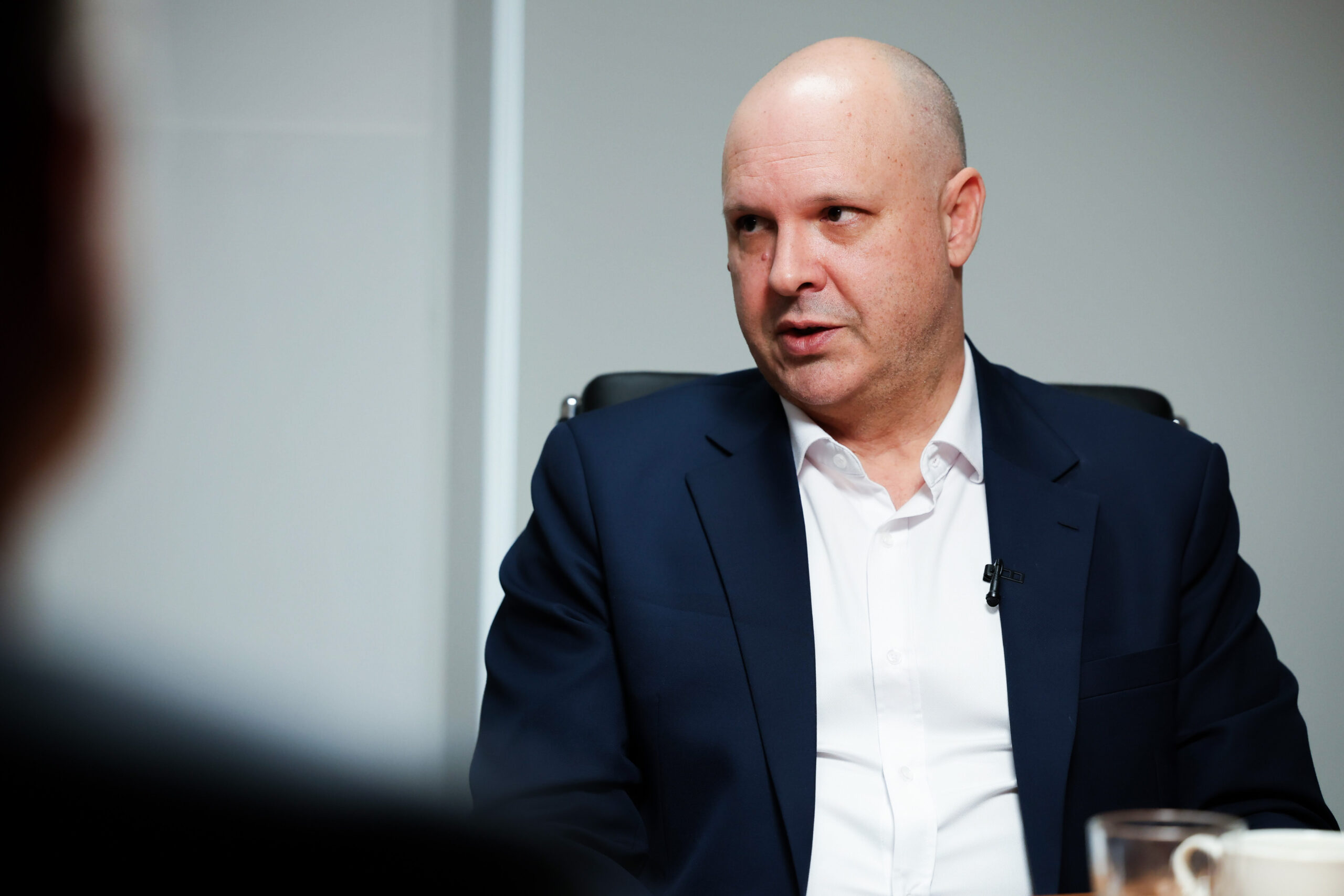 The organisational implications are profound. AI has become embedded in strategy, product and client functions, not just operations. “This is top-down,” says one executive. “It’s no longer a technology initiative – it’s how we run the organisation.”
The need for scale sparks the consolidation question
There were few words used more than “scale” throughout the conversation, describing the significant amount of investment and work needed to operate a top tier custodian in today’s environment.
“Think about how we spend our budget,” points out one speaker. “We’re all still somewhere on our modernisation journeys, but hopefully coming towards the end of those. We still have to support clients that want to go into new markets and new assets. We’re dealing with AI, with data, with blockchain, with cyber, with resiliency, with risk, with market infrastructure change and consolidation, and global regulatory change.”
The elephant in many rooms during custody conversations is usually consolidation. Not this room though, as speakers tackled it head on.
There have been a number of exits across the custody landscape over the past decade, from the Nordics to Australia, to banks exiting the global custody game to operate solely in single markets.
But if the biggest are getting bigger, and the investment required to compete is so significant, then surely more exits are inevitable. The speakers hope this is not the case.
One participant notes: “We need the Citis, the BNP Paribas and the HSBCs. We need them to stay in all of these markets because they’re much better at doing that – that’s what they do. We have got to pay them to be sustainable, to invest in cyber and technology and data integration and all these things, while at the same time managing all of that fee compression.”
Consolidation among the top ranks is also a fascinating topic. State Street attempted to acquire the investor services business of Brown Brothers Harriman a few years ago, while the Wall Street Journal chose a sleepy Sunday in July to reveal that a conversation had occurred between BNY and Northern Trust CEOs over a potential deal. Neither of these occurrences were discussed during the roundtable.
What did come to light was the difficulty of integrations post-deal. It may be less common now, but there have been periods of M&A activity on the global custody scene in the past, leading to some in the group believing that partnerships can often be the way forward.
“There’s too many examples in our industry where acquisitions have been completed, but they don’t actually see it all the way through into an integrated model,” says one speaker. “In today’s environment, you can’t afford to have that happen.”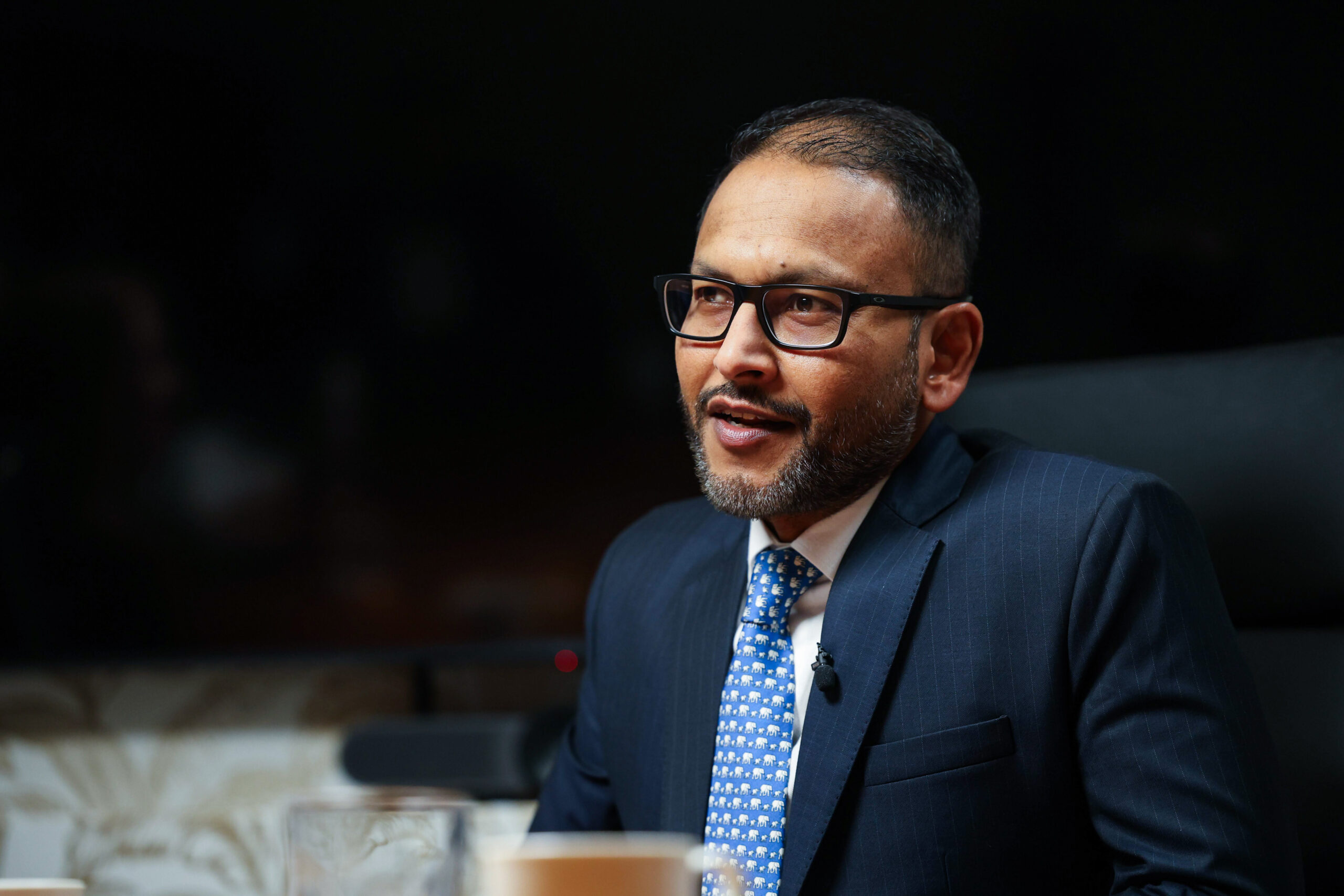
Partnerships over aggressive acquisitions
State Street and BNY have been the most active on the M&A front of the four. Arguably it’s easier when you are predominantly a trust bank as opposed to an investment banking giant with a strong servicing arm.
State Street has, in recent years, added Charles River Development and CF Global to its ranks on the front-office provision side, and private markets outfit Mercatus to try and capitalise on the burgeoning sector. With the aforementioned BBH deal now in the rear-view mirror, State Street recently finalised a deal Mizuho Financial Group’s global custody and related businesses outside of Japan in October, in a prime example of a partnership leading to an eventual transaction.
“When you look at the recent deals that we’ve done, Mizuho was one hundred percent off a local market partnership. Both firms benefitted from the deal that was done. And as a consequence, we happily got it done in pretty quick order,” explains State Street’s Rowland. “I’m a big believer in looking for the partnership opportunity, because they are ultimately the ones that serve our clients the best.”
BNY has also added complimentary businesses in recent years, firstly through funds technology outfit Milestone Group, and subsequently managed account solutions provider, Archer.
“Robin [Vince] has been super clear that we’re open for having those conversations, but he’s also been incredibly clear that the bar is very high,” explains Cuthbertson. “The Archer acquisition to leverage off your point, Chris, was one of capabilities. It’s a capability that we didn’t have. We think that’s going to be a growing area, and so that investment, that acquisition, made sense.”
The M&A scene has been interesting in the custody space with very few deals occurring and sellers often struggling to find a partner willing to pay up and take on the integration burden. This has led to some banks reluctantly keeping these units, or exiting the business without a suitor, only for its competitors to sweep up clients left without a home anyway.
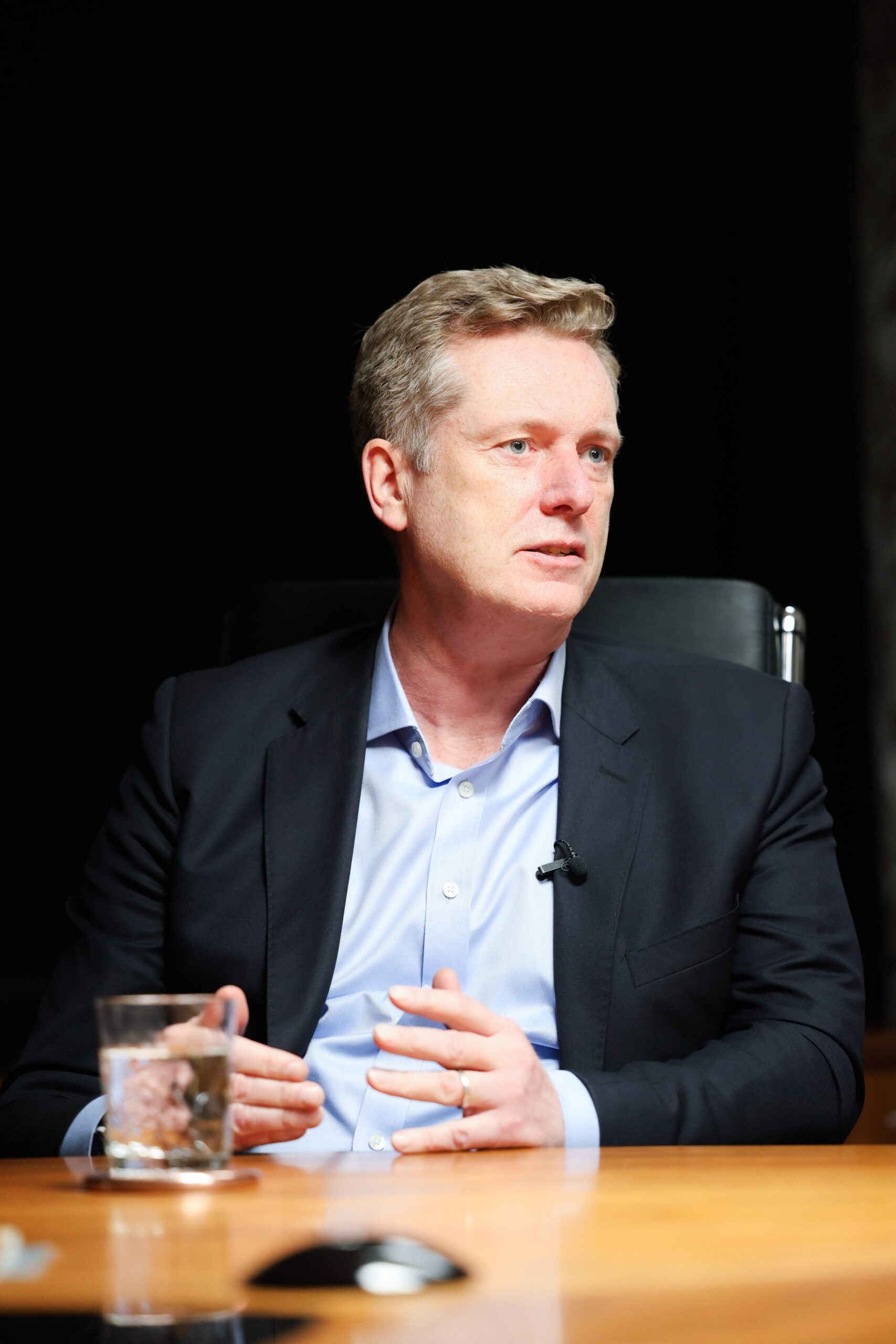 “Am I super interested in buying another smaller custodian? I think the answer is maybe not,” says one speaker. “The point on scale would suggest that people are going to gravitate to us over time anyway. So what’s the premium you’re paying? And is that a piece of business that you think is going to give you the right return on investment?”
A reshaping of the buy versus build debate
In 2018 Global Custodian ran a feature titled: How custodians learned to stop worrying and love the fintechs which encapsulated an ongoing trend where banks were suddenly putting their trust and dollars behind a wide range of start-ups promising a plug-in transformation and agility dream. Countless partnerships, investments and funding rounds followed, with varying degrees of success.
From the custodian perspective in 2025 however, sentiment appears to be cooling.
“We saw this explosion of fintechs into our space and we partnered with many of them,” highlights one speaker. “What’s been really interesting to see is that it’s incredibly hard to be sustainable as a fintech in this business. Some have been reasonably successful and those ones – in my opinion – are the ones that have had a very clear objective which they stuck to, or that have been consortium based, or really had the right knowledge and expertise around the table to be focused on that mission.
“There are also the ones that haven’t, that have given up and gone to private capital. But the minute you do that, all of a sudden your business becomes about profitability and not about the mission, and the whole thing falls apart.”
Another speaker opines: “I think there’s a role for them to play, especially when it comes to standardisation and solving common problems that individually none of us can solve by ourselves. But there’s a lot of risk there and they take a lot of money and a lot of capital to be able to scale at the level we need them to scale at. That will continue to be an interesting space to see who makes it and who doesn’t.”
Another added that many of the innovations once offered by fintechs have now been internalised. “We’re better at building those capabilities ourselves. When we do partner, it’s because we’re all in it together.”
There was a strong feeling in the room that a lot of fintechs were actually set up to the benefit of the broker-dealer community – and to a lesser extent the buy-side – but not necessarily with custodians front of mind.
This felt like the first time this conversation had occurred between the four participants, who have interacted plenty in the past, as realisation appeared to dawn across the table.
Agreeing, one adds: “The consequence of that [focus on the broker-dealer community] was that it ignored the necessity of having a sound business case for the custodian.
“The assumption was the custodian will just pay because the buy-side client or the broker dealer said ‘you will do this’. That has not panned out to be the case, which has created a challenge in those business models.”
Still, looking back at the 16 firms Global Custodian named in 2022, many are still thriving and playing a significant role in the future of the industry. Those most highly thought of are evident through future rounds of investment and mandates with the banks that have invested in them. According to the speakers, despite a reduction in the volume of partnerships, there is still room for fintechs to have an impact.
“There are still some really challenging and interesting areas which we have not figured out as a collection of banks or with fintechs,” one speaker notes. “Just take tax and what that means for our businesses. I mean that is the standout example where we still have not got our heads collectively around how we solve for the paper that floats around, the complexity or the risk we have with it. And it’d be really nice to actually see someone come in and challenge that and say ‘we have a solution for you’.”
Digital assets: The future or hyperbole?
Much like the blockchain hype on the mid-2010s, everyone seems to be unquestionably jumping on the digital assets bandwagon now – whether that be native cryptocurrencies or tokenised securities. We have rarely ever stood back to ask whether this is, unequivocally, the future, or whether traditional custodians can actually make money from this trend.
But even behind closed doors, the four experts still see plenty of potential in a tokenised future.
“I don’t think it’s hype anymore,” says one executive. “It’s just slow. Transformation on this scale always is.”
 Another notes that the convergence of decentralised and traditional finance now feels inevitable. “We’re seeing a momentum we didn’t have even two years ago. There’s FOMO, yes, but also focus. The industry agrees on which problems technology can genuinely solve.”
Custodians view stablecoins and deposit tokens as potential enablers of true 24/7 settlement – the long-imagined “atomic” matching of cash and securities. “Until the cash leg is instant, you can’t have instant securities,” one explains explained. “DLT gives us a way to close that gap.”
Yet questions remain about commercial viability. “You have to be in this space,” one leader says. “But being there and making money from it are two different things.”
Several see near-term opportunity in tokenised money-market funds and digital wallets. “Wallet ownership is going to define the next competitive frontier,” one participant argues. “If you own the wallet, you own the client relationship – just as PayPal or Alipay own the cash experience today.”
Overall, the consensus was pragmatic: digital assets will integrate gradually, not disrupt overnight. “We started talking about this in 2016,” Elson reflects. “It’s 2025, and now it’s becoming more real – but we expect the market to continue to mature gradually.”
Final thoughts
By the end of the session, what stood out was a collective purpose. Despite diverse strategies, each custodian voiced confidence in the industry’s trajectory.
“There’s a spirit of innovation now,” one guest says. “For years, custody was about efficiency and cost control. Today, it’s about creativity and value creation.”
Another summed it up simply: “We’ve proven we can modernise without losing trust. That’s our biggest achievement.”
From the outside, the custodial world can appear slow-moving. Inside the room, it felt anything but. The conversation spanned quantum computing, retail investment reform, FMI transparency and the convergence of traditional and decentralised finance – yet returned repeatedly to a single theme: optimism grounded in realism.
“The beauty of custody,” said one participant, “is that it evolves quietly until, suddenly, it’s the foundation for everything else.”
As the session closed, the sentiment was clear. Far from being the back-office of the markets, global custodians see themselves as architects of their next era. An era defined by intelligence, integrity and unprecedented possibility.