The world’s four largest custodians – BNY, Citi, JP Morgan and State Street – safeguard a combined $180 trillion of assets, a sum which eclipses the world’s annual GDP or the total value of the global stock market.
They compete globally, yet also act as clients to one another and collaborate on infrastructure and initiatives that hold the industry together.
This is truly an exclusive quartet who share unique pressures, challenges and opportunities of delivering securities services at unrivalled scale in 2025.
In late October 2025, the heads of custody at these four organisations joined Global Custodian for a behind-closed-doors roundtable discussion under the Chatham House Rule for a candid conversation that captured the true essence of what it means to be a securities services giant right now.
The conversation which ensued was revealing of what truly occupies the minds of the world’s four biggest custodians, and the real challenges and opportunities they face.
Some comments have been attributed in this article, where the spokesperson was happy to be quoted.
“It’s positive that everyone has come together. We’re all in a room, we all know each other,” says Hannah Elson, global head of custody, J.P. Morgan. “I don’t know that 10 years ago that would have been the case, or that we would be so easy to pick up the phone to each other. There’s a huge amount of engagement and solving through things together, which I think is quite unique.”
Others remain anonymous, for obvious reasons.
“We caught the North Koreans trying to embed four operatives into our organisation,” reveals one speaker. More on that later.
The candid nature of the conversation occasionally revealed some challenges and concerns around market infrastructure providers and regulators. Yet overwhelmingly there was a mood of optimism in the room about a long-running purple patch for the big four, where revenues and assets under their guard are reaching new heights with every passing quarter.
“We are in a generation of unprecedented wealth creation, and the increase in the number of investors – not just institutional but also retail – is having a profound impact on the post-trade industry,” explains Amit Agarwal, head of custody, Citi Investor Services. “This shift is driving custodians to deliver real time custody and post-trade services to cater to evolving client demands in an ‘always-on’ world.”
A rare opportunity
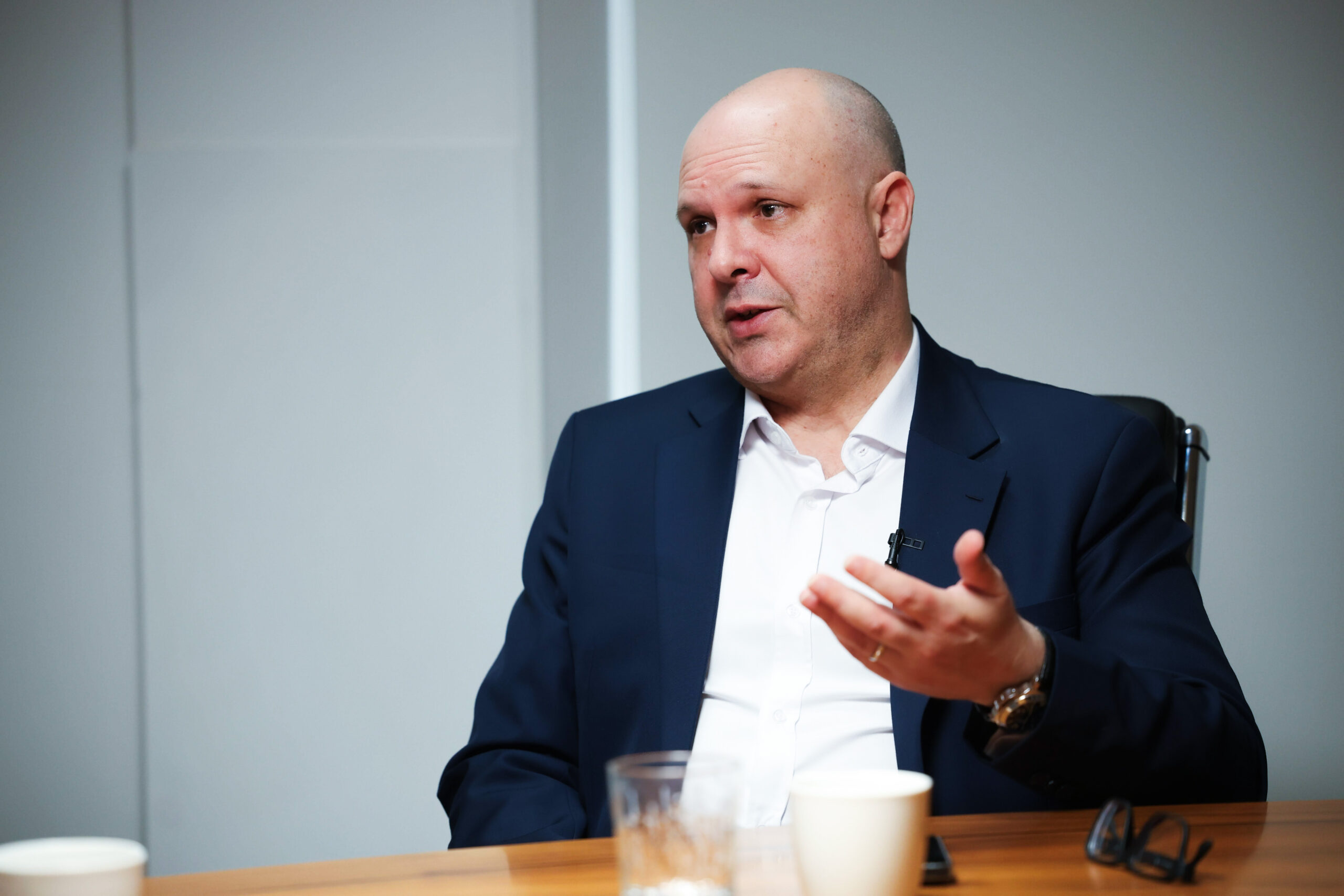 The group agreed that the opportunity to discuss broadly what it means be a global custodian day-to-day was a rare opportunity and differed from the thematic public conversations which often focus on themes such as settlement compression, digital assets and regulation. Not that there’s anything wrong with those discussions – which are, of course, essential. But instead, the often-avoided difficult conversations around sanctions, consolidation, cyber-crime, acquisition integrations, fee compression, geopolitics and the real risk-reward trade off of providing native digital asset custody, were raised frequently during the discussion.
Take the topic of policymakers, for example, one speaker noted that the complexity of the ecosystem sometimes makes it difficult to achieve intended goals, even though regulators have good intention to start. “You sit down with them and you realise they don’t understand how we work,” noted the speaker with an air of astonishment.
The four were most excited about artificial intelligence. They were most worried about cyber security. The were cautiously optimistic on digital assets.
There was a fair share of frustration directed at CSDs. There were mixed views on emerging markets. And the tone on fintech partnerships has noticeably shifted, with the honeymoon period now long forgotten.
On the topic of geopolitics, well – it most certainly remains front of mind. In fact, the Russian sanctions following the invasion of Ukraine seem etched into memories of some of the speakers as one of the most challenging times in their respective careers.
That particular chapter of the history, of course, rumbles on and the debate over how Europe will utilise Euroclear’s frozen assets from Russia led one speaker to opine: “That is a really interesting scenario that challenges fundamental concepts around what it means to be a custodian and what it means to safekeep someone’s assets.”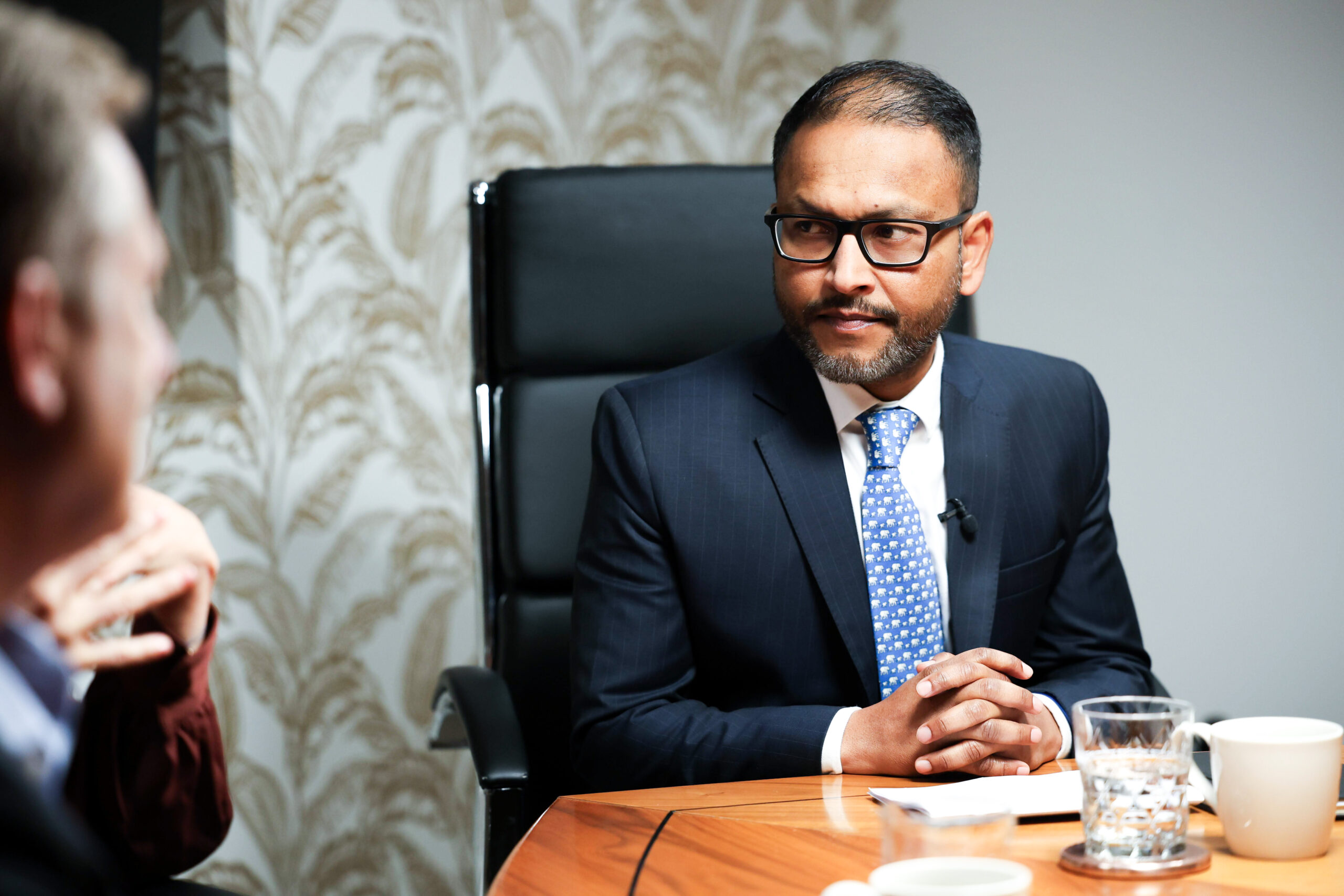
Being a custodian is exciting, because of new asset classes and technologies, but it’s expensive because of technology demands and cyber defence measures.
The broadening of new asset classes and technologies has created an exciting environment for custodians, though the related costs to manage that increasingly complex landscape has skyrocketed. And that doesn’t include cyber security cost pressures.
Following the fallout of the financial crisis, a time defined by fee pressures, regulation and talk of custody becoming commoditised, the biggest players have emerged into an era where they are thriving. Spurred by new services with flourishing units for outsourced middle- and front-office services, custodians are now driving revenue across data, private markets and, likely soon, digital assets.
In a landscape which favours scale, the biggest four are investing like no others can, and winning out because of said investments. It’s a welcome respite from some difficult phases in recent decades. Which leads us to the first question we asked our guests…
Why is it a good time to be a custodian?
Okay, it’s a leading question, but let’s look at the facts: there has been a double dip of record revenue and record AUC/A among the big four players for the past three years. There are many reasons behind this, such as rising market valuations, higher trading activity, expanded mandates and market consolidation driving business to the largest custodians.
“It’s a great time to be a custodian,” says one speaker, “client activity is buoyant, we’re seeing huge inflows in active ETFs, issuance up at record levels. From a business perspective, it’s never been better.”
 In addition, the emergence of private markets, digital assets and the cross-selling of products beyond just the back-office, has ushered in a new era for the securities services giants.
“The number of engagements we’ve had with clients looking at front-office, middle-office technology, in addition to what they typically take as a custodian back-office, has really accelerated over the last 18 months or so,” says Chris Rowland, head of custody, digital and fund services product, State Street. “We’re super excited about that trend and long may it continue.
“Our clients have been, for many years, looking at their operating models, but that has accelerated with the last couple advancements in technology helping that process. Every single conversation at the moment seems to be on something about AI and how that can be used. Combine that with data and how data is being utilised by our clients, that has made a massive difference and has really accelerated their enthusiasm for potential change.”
At the same time, custodians are venturing into new services and asset classes while spending a significant amount on upgrading their technologies. AI is being quickly deployed, the digital asset space represents opportunity, and even settlement times are coming down to a point where talk of same day – or instant – is a not-too-distant reality.
“I’m genuinely excited around the new tools we have,” says Ryan Cuthbertson, global head of custody services, BNY. “I see my job as being a plumber and we need to make sure that we’re connecting issuers and investors, and the new tools that we’ve got allow us to do that quicker and better.”
We’re certainly in a period of regular annual growth in the 2020s. As of the end of Q3, Global Custodian had tracked eight consecutive quarters of collective AUC/A growth among the top 10 custodians.
But then came the caution.
Perhaps it’s experience, or an Icarus-like concern of getting carried away, but you could almost hear the harmonious background music suddenly stop amid talk of how great everything is, as one speaker cautions that “there are some warning signs”. Another acknowledges “it won’t be this way forever”, which sparked some debate at the table.
“I don’t disagree with anyone in the room, we always have this caution and it’s a good, healthy caution to have,” another speaker pushes back. “But if I look at kind of the growth we’ve had, it’s been despite the volatility that we’ve seen – and I’m talking from Covid all the way through to the energy crisis, interest rate crisis, and what we’ve seen with the new US administration. There’s been a bit of volatility and we’ve all benefitted from that, but it hasn’t really impacted either deposit growth or asset growth. So maybe I’m going to be a little more cautiously optimistic that I don’t think we’re going to suddenly see it go the other way.”
Why is it a challenging time to be a custodian?
During this impressive run of success and progress among the Big Four, there have been several crises endured. From Covid to tariffs, wars to blackouts, black swan events have become increasingly common. But few seem to have impacted the largest custodians more than the fallout from Russian sanctions.
In an age of heightened geopolitical tensions, custodians have a more difficult task than ever of keeping the ship steady.
Geopolitical tensions make it a difficult time to operate as a custodian. For many years, Western banks had identified huge opportunities in markets such as Russia and China, but the 2022 invasion of Ukraine sent shockwaves through the asset servicing world – with banks forced to rewrite the rulebook on risk and learn to expect the unexpected. The sanctions stemming from the start of the conflict – on both sides – still have ramifications for these custodians today.
“Geopolitics is always an important part of what we do, but it’s the way that the world continues to become multipolar that is having such an impact,” points out one speaker. “A lot of different trading corridors, investment corridors, and bilateral multilateral alliances are being formed.”
Agarwal adds: “Our clients are looking for advice on tactical investment opportunities or are trying to risk mitigate and rebalance portfolios. There are only a handful of the big players that have the wherewithal and the actual boots on the ground to be able to guide and enable clients to make better decisions, react more quickly and remain nimble in global markets where situations and business models can change overnight. Our goal as custodians is to provide clients with stability and optionality in a world of change.”
Another speaker notes: “Russia is the big example because it has been so significant, so unprecedented, and something that didn’t follow the rulebook. And so, we’ve all had to learn as we go through this.”
Then things got really, really interesting.
“Think about what’s happening now with Europe coming under increasing pressure to figure out how to continue to finance Ukraine – and what that means for an institution like Euroclear, supposedly the safe haven, boring bank that we go to to ensure our Eurobonds are kept safe,” notes one speaker.
“They’ve been challenged, in a sense, with a reparation environment. The €190 billion that sat there in Euroclear, which is from sanctioned Russian frozen assets, is now going to potentially be made available to finance a war. That is a really interesting scenario that challenges fundamental concepts around what it means to be a custodian and what it means to safekeep someone’s assets.”
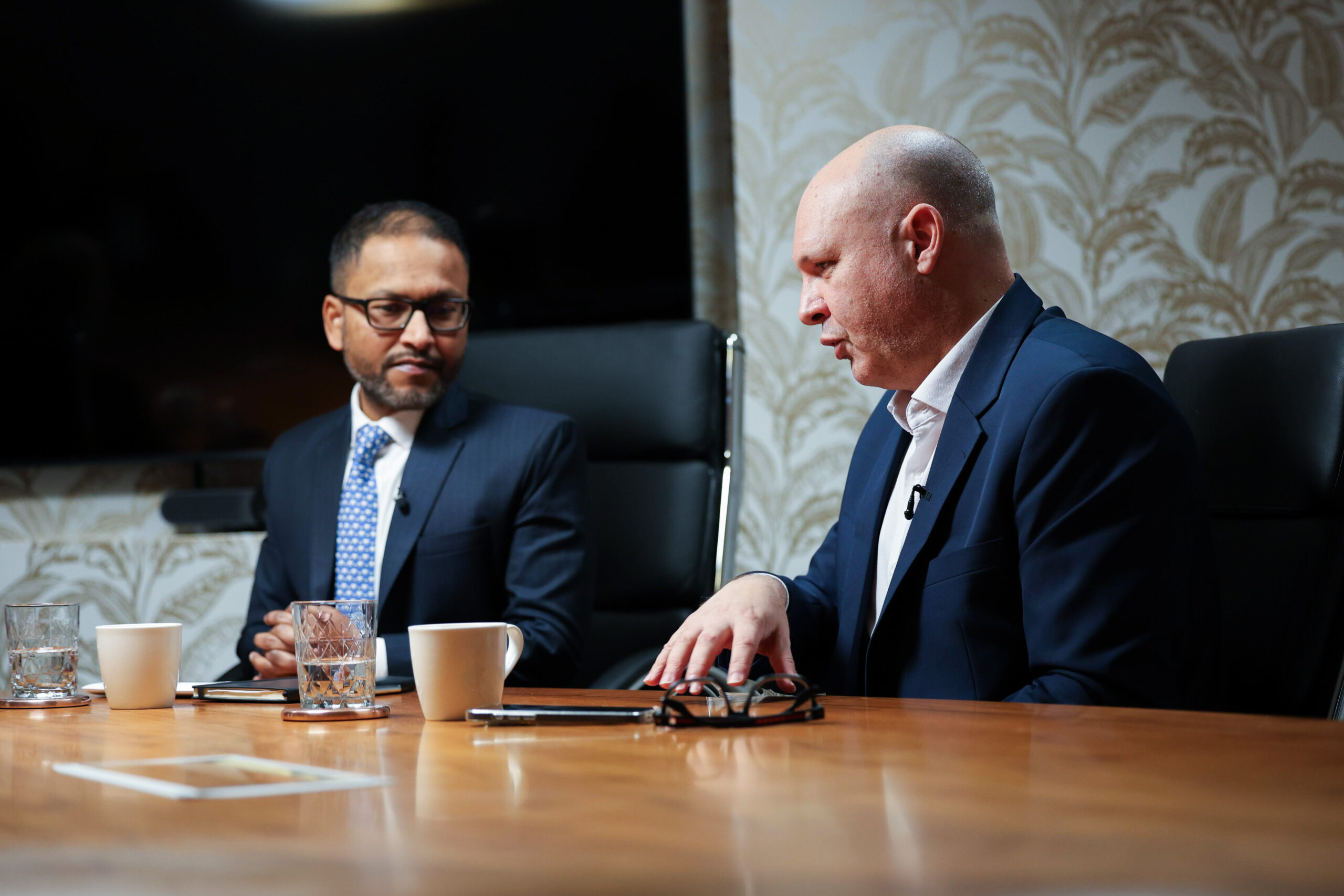 Another picks up on that point, stating that those assets are not all held within Euroclear. “They are represented in the books and records of banks, financial market infrastructures (FMIs) and intermediaries all over the world.”
Cybersecurity: The price of scale
The conversation then moved to cyberwarfare, sparking more interesting debate.
With great scale comes great exposure, unsurprising considering all four institutions are considered Global Systemically Important Banks (G-SIBs).
As we mentioned at the start of the article, one participant disclosed that their organisation had recently intercepted attempts by foreign operatives to infiltrate internal systems. “It’s real,” they say plainly. “We’re spending extraordinary sums to defend ourselves – not because we want to, but because we must.”
For an interconnected industry, the worries stretch far beyond each bank’s own four walls. Being intrinsically linked to a network of sub-custodians, market infrastructure providers, asset managers, owners, funds, technology firms and more, there would be a monumental knock-on effect should a cog in the network fall.
“The bigger the bank, the more you’re spending,” says one participant.
Another notes: “Disproportionately, that means that you are able to have better threat intelligence. It means you have better capabilities available to you. But as you go down through the hierarchy of custodians, that becomes increasingly worrying because not everyone can keep up.
“Where’s that weakest link? Well, it could be anywhere, because the actual relative amounts of money available are not at the levels they probably need to be at the smaller custodians and the smaller CSDs.”
Then the real worry emerged. In fact, this was touted as potentially the biggest thing that could happen to the industry since the sanctions following the events of February 2022.
“We’ve seen events that have been impactful,” acknowledges one speaker, pointing to the recent Amazon outage. “But what we haven’t seen yet is the big one that knocks us all out for several days. Whether that’s going to be Swift or a big FMI, I think that is, at some point, going to be the next the next big thing that we’re all going to be working through.”
Firms are now investing heavily in rapid-recovery architectures – maintaining parallel infrastructure in secure “DMZ” environments that can be spun up instantly in the event of an attack.
The conversation also turned to the evolving nature of fraud. AI, it was noted, is being used not just by custodians, but by criminals. “We’re seeing clients’ emails and IDs being cloned in ever more convincing ways,” one participant notes. “AI is a tool for both sides.”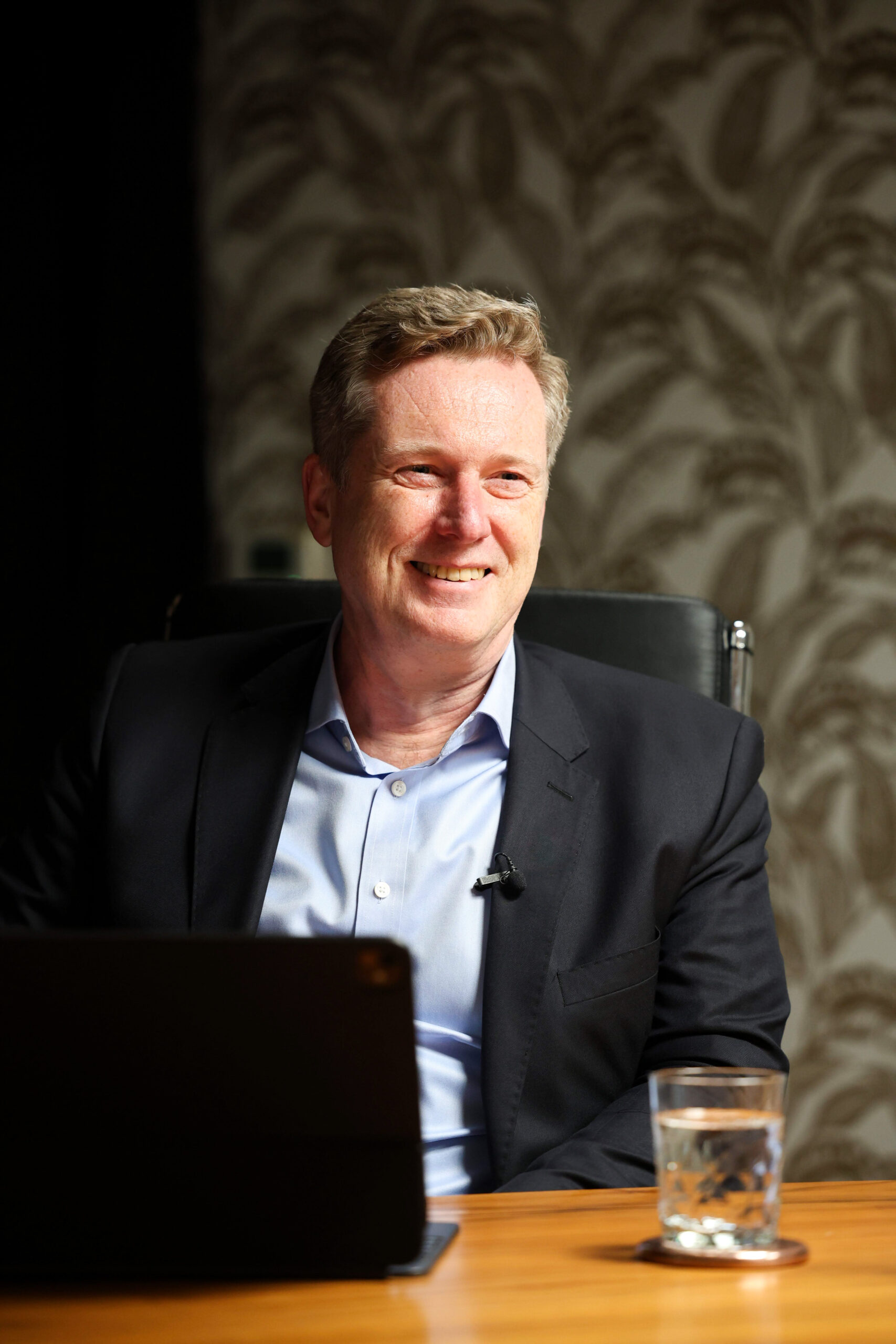
Still, the tone remains one of resolve rather than fear. “We’re realistic about the threat, but we’re also better equipped than ever,” says another. “Cybersecurity has made us sharper, more collaborative, and ultimately more trusted.”
Quantum computing also entered the conversation, less as hype than as horizon planning. “If quantum breaks encryption by 2035, that’s not far away in development terms,” one participant warns. “We need to be quantum-safe long before that.”
The discussion reflected a quiet confidence that custodians – perhaps more than any other segment of finance – have both the discipline and the incentive to lead in AI governance. “This industry has always been about control, validation and trust,” one executive concludes. “Those principles translate perfectly to responsible AI.”
We need to talk about CSDs
If there was a note of collective frustration, it came in discussion of FMIs. A particularly topical conversation, given the recent release of a report on Europe’s rising FMI fees, with the sizable differences between European and North American costs cited as a growing burden that custodians struggle to pass through.
“FMI costs have steadily increased while our fees have compressed,” one executive says. “The result is a squeeze that isn’t sustainable.”
According to the study, published by the Association for Financial Markets in Europe (AFME), custody fees at European CSDs were between 19% and 650% higher than in North America.
International CSDs were found to be the most expensive, with charges up to 139% greater than those of their domestic European counterparts, found the report.
The analysis shows that higher custody costs are not offset by economies of scale. Larger CSDs, when measured by assets under custody, often applied higher custody and settlement fees than smaller peers.
“There’s a lack of competition,” one participant argues. “Absent pressure, FMIs operate in very comfortable monopolies. They need to invest in AI, data and resiliency at the same pace we do.”
The panel agree that the next five years could bring real change. European and UK market infrastructure consolidation has yet to yield efficiency gains, leaving an opening for greater regulatory scrutiny and potential reform.
“Scale is probably going to win out in terms of how that process goes,” one participant explains. “But to me, it’s welcome because we can’t have this situation we’ve got at the moment, where Europe and the UK are fundamentally uncompetitive versus the US in terms of underlying CSD costs.”
The onus should also be on the custodians to check and challenge the organisations, another adds. “There is no reason why a CSD bill should have 215 line items of charges. I think we are all challenging ourselves as well to make sure that we are appropriately checking, challenging and pushing back. Around 20-30% of the charges are not even AUC or settlement, they are just ancillary charges for paper, fax and recon, et cetera. There are certainly 20-25% of just hygiene efficiencies that through proper governance, we should be able to extract out.”